The Future of Trade Finance in Africa
Africa's trade finance gap has been estimated at over $80 billion annually. But a shift is underway. Here is what the next decade of trade finance on the continent is likely to look like — and who will drive it.

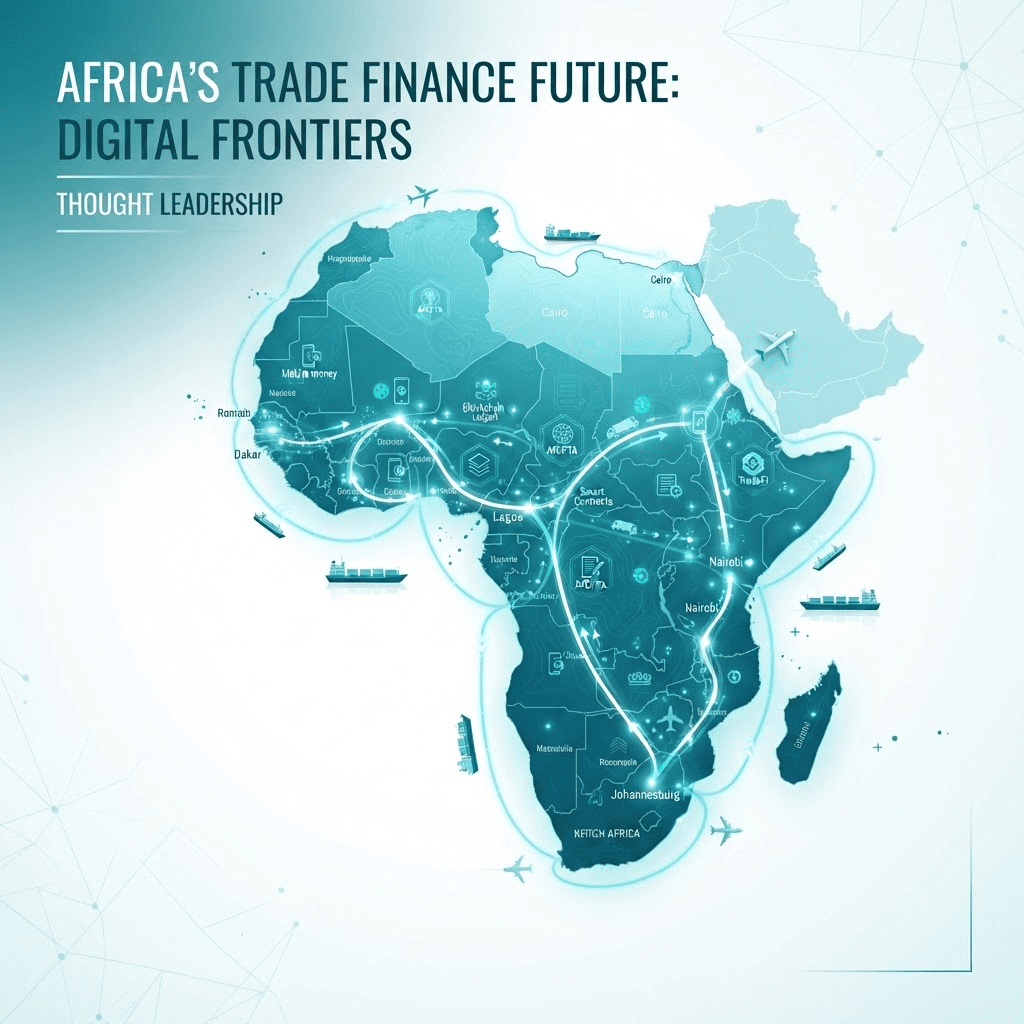
Walk through any major market in Lagos, Accra, Nairobi, or Johannesburg, and you will find businesses doing real commercial work — distributing goods, supplying manufacturers, moving agricultural commodities, serving government contracts. Most of these businesses are underserved by formal finance. They operate on trust, relationships, and informal credit because the formal system was not built for how they work.
That is beginning to change. The forces driving the shift are not theoretical. They are structural, technological, and commercial — and they are moving faster than most people in traditional finance appreciate.
The scale of the gap — and why it matters
The African Development Bank and the International Finance Corporation have separately estimated that Africa's trade finance gap — the difference between what businesses need and what formal financial institutions supply — runs to over $80 billion annually. This is not a gap between good businesses and bad ones. It is a structural gap between how banks have historically been built and how African commerce actually operates.
The businesses on the wrong side of this gap are not marginal. Many of them are the most commercially active enterprises in their sectors — distributors moving enormous volumes of goods, manufacturers supplying major buyers, agricultural processors linking smallholder farmers to export markets. Their challenge is not capability. It is access.
What is changing
- Digital infrastructure: mobile money, bank verification, and identity systems are making it possible to verify and transact with businesses that previously had no formal digital footprint.
- Data as credit signal: transaction history, payment behaviour, and trade records are emerging as credible alternatives to traditional credit scoring in markets where credit bureaus are thin.
- Transaction-based financing: funders are increasingly willing to underwrite specific transactions — tied to confirmed orders and verified buyers — rather than requiring general collateral.
- Embedded finance: financing is moving closer to the point of transaction, rather than sitting in a separate institution the supplier must visit before they can do business.
- Cross-border payment infrastructure: improvements in intra-African payments are expanding the potential addressable market for trade finance beyond single countries.
The role of fintech
Fintech is not replacing banks in African trade finance. It is occupying the territory that banks have left unserved. The businesses building in this space are doing two things simultaneously: reducing the cost of serving SME suppliers through automation and data, and building the trust infrastructure — verification, payment controls, settlement — that makes formal financing viable for transactions that previously depended entirely on informal trust.
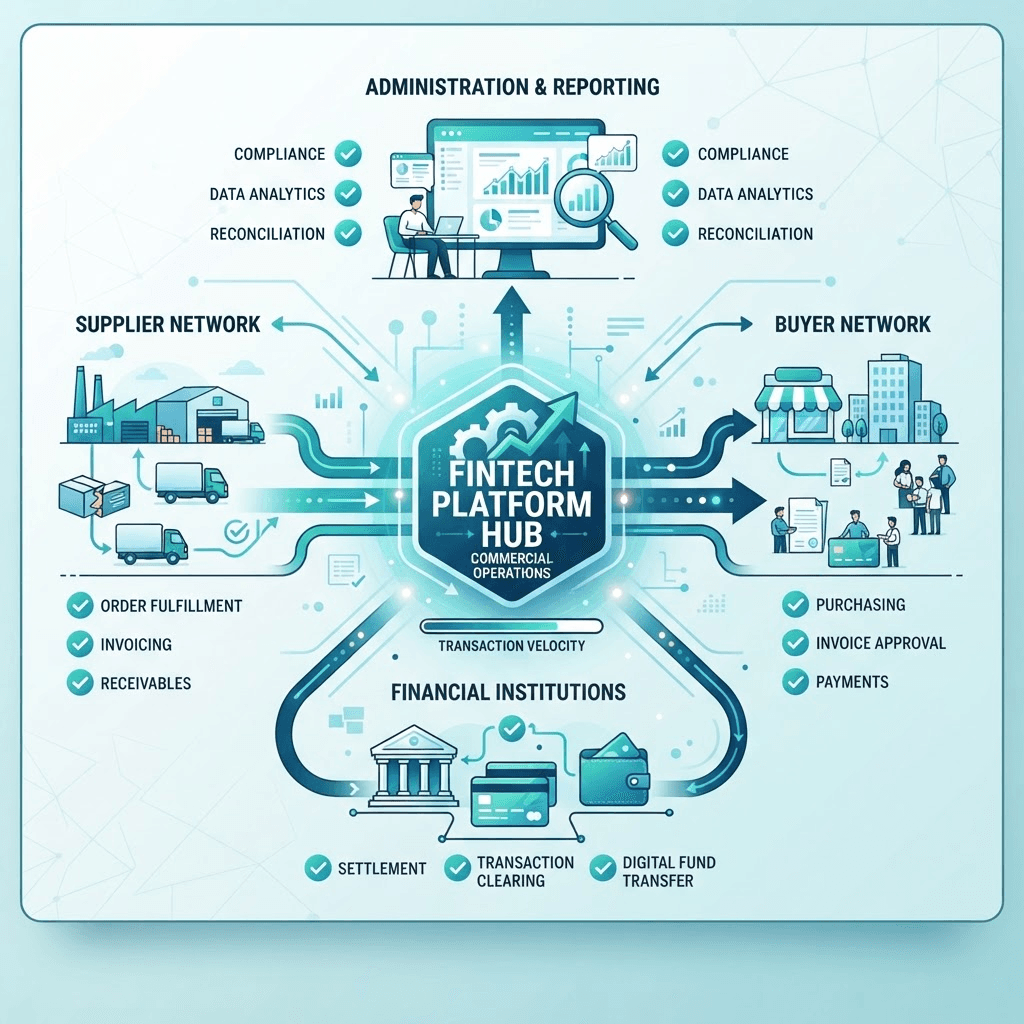
The most interesting developments are at the intersection of transaction management and working capital. When a platform can verify a buyer, confirm an order, advance capital, track fulfilment, and manage settlement in a single workflow, the cost of extending finance to an SME supplier drops dramatically. This is what makes the economics work at scale.
Fintech is not replacing banks in African trade finance. It is occupying the territory that banks have left unserved.
What the next decade looks like
The trajectory points toward a future where transaction-based finance is the norm for B2B commerce in Africa, not the exception. Where a supplier in Kano or Kisumu with a confirmed purchase order from a verified buyer can access working capital in hours, not weeks. Where payment disputes are resolved by transaction records, not litigation. Where the velocity of trade across African supply chains accelerates because the friction that currently slows it — capital gaps, payment uncertainty, trust deficits — is systematically removed.
This is not optimistic speculation. It is the direction that economics, technology, and the commercial behaviour of African businesses are already pointing toward.
What it means for suppliers today
The businesses that will be best positioned for this future are the ones that start building the right habits now. Clean financial records. Verified buyer relationships. Purchase orders that are specific and documented. Transaction histories that tell a coherent story. These are the foundations that will determine who gets access to the wave of capital that is moving toward African trade over the next decade.
Key Takeaways
- Africa's trade finance gap exceeds $80 billion annually — and it is addressable.
- Digital infrastructure, data-driven credit assessment, and transaction-based financing are the driving forces of change.
- Fintech is serving the market that banks have left, not replacing banks.
- The trajectory is toward transaction-based finance becoming the norm for African B2B commerce.
- Suppliers who build clean records and structured processes now will be best positioned as access to capital improves.
Frequently Asked Questions
What is the African trade finance gap? It is the difference between what formal financial institutions provide to support trade transactions in Africa and what businesses actually need. It includes working capital for purchase order fulfilment, invoice financing, letters of credit, and supply chain finance.
Will banks eventually serve this market? Some are trying. But the cost structure and risk assessment methodologies of most banks make SME trade finance structurally difficult for them. Specialised platforms with lower operating costs and better-suited underwriting models are better positioned for this segment.
Which African countries are furthest ahead in trade finance development? Nigeria, Kenya, South Africa, Egypt, and Ghana are among the most active markets, driven by the scale of their SME sectors and the maturity of their digital infrastructure.
Be part of what is coming
Reelaay is building the transaction infrastructure for African commerce — starting with working capital, verification, and settlement for Nigerian suppliers. Join the platform and be among the businesses shaping the future of trade finance on the continent.
Omotayo Olowofeso
Founder & CEO, Reelaay
Omotayo Olowofeso is the Founder and CEO of Reelaay, where he is building the transaction platform that helps African suppliers execute confirmed purchase orders with working capital, verification, and settlement built in. He writes about B2B trade, working capital, and the operational realities of doing business across African markets.
View all articles