Why I Built Reelaay: A Founder's Perspective on African Trade
Reelaay did not come from a whiteboard. It came from watching real businesses — capable, hardworking Nigerian suppliers — lose deals they should have won because the infrastructure was not there. This is the story behind the platform.

The idea for Reelaay was not a lightning bolt moment. It was a slow accumulation of the same frustration, observed from different angles, until it became impossible to ignore.
I had seen it in conversations with distributors in Lagos who were turning down orders they should have been celebrating. I had heard it from procurement managers at large corporates who were exhausted by supplier delivery failures that they could trace, with hindsight, to working capital problems the supplier never disclosed. I had read about it in the data — the $80 billion annual trade finance gap in Africa, the statistic that most SMEs in Nigeria cite access to finance as their primary constraint on growth. But data points are abstract. The conversations were not.
The problem I kept seeing
Here is what kept striking me: the businesses facing these problems were not bad businesses. They were not poorly managed, or lacking ambition, or operating in unviable sectors. They were often excellent — technically capable, commercially active, with real buyer relationships and real confirmed orders. The problem was structural. The infrastructure for executing large B2B transactions in Nigeria — the working capital, the verification, the payment management, the settlement — was either missing entirely or scattered across different providers in ways that made the whole thing unworkable.
A supplier would have a confirmed order from a credible buyer. They would approach a bank for working capital and hit a wall of collateral requirements and approval timelines measured in weeks. They would try to verify the buyer's payment history through informal channels — calls, industry contacts — and get an incomplete picture. Payment would eventually come via a wire transfer that sat pending for days. And through all of this, they would manage the whole thing manually, chasing emails and bank confirmations and delivery receipts with no shared visibility for anyone involved.
Every piece of this was solvable. Not one at a time, but together — as an integrated system.
Why Nigeria, and why now
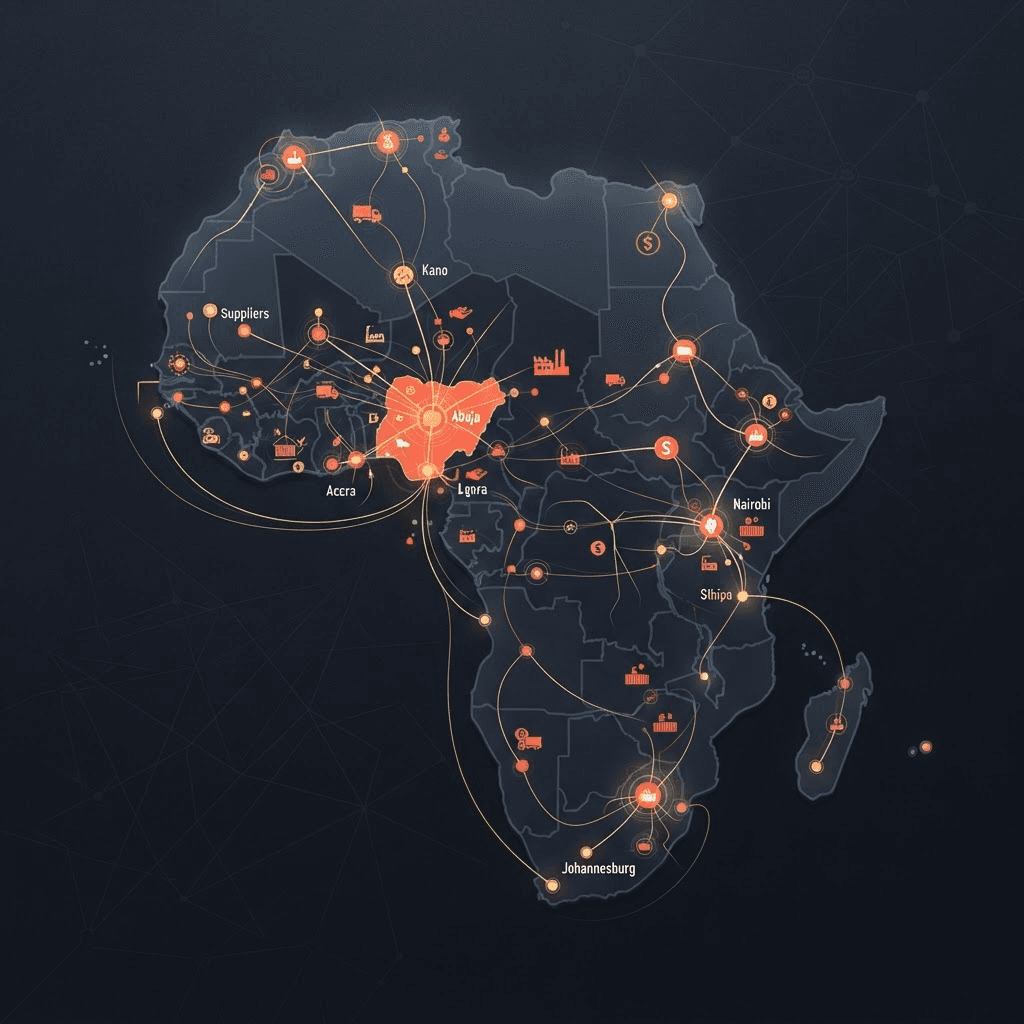
Nigeria is the largest economy in Africa by GDP and one of the most commercially active markets on the continent. It has a massive, sophisticated B2B sector — manufacturers, distributors, agricultural processors, healthcare suppliers, construction material companies — doing real commercial work at scale. And it is systematically underserved by the financial infrastructure that equivalent businesses in other markets take for granted.
The timing matters because the enabling infrastructure is finally available. Mobile banking penetration has transformed how businesses can transact and be verified. Digital identity systems are maturing. Data that was previously inaccessible — transaction histories, payment behaviour, supply chain records — can now be used to make credit and verification decisions that would have been impossible five years ago. The problem has existed for decades. The tools to solve it have only recently arrived.
The problem was structural. The infrastructure for executing large B2B transactions in Nigeria was missing. Every piece of it was solvable — not one at a time, but together.
What Reelaay is built to do
The vision is straightforward: more Nigerian and African businesses should be able to execute more commercial transactions, more reliably, at greater scale. A supplier in Kano or Enugu with a confirmed purchase order from a verified buyer should be able to access working capital, complete delivery, and receive settlement without the whole thing depending on their personal network, informal trust, and manual processes.
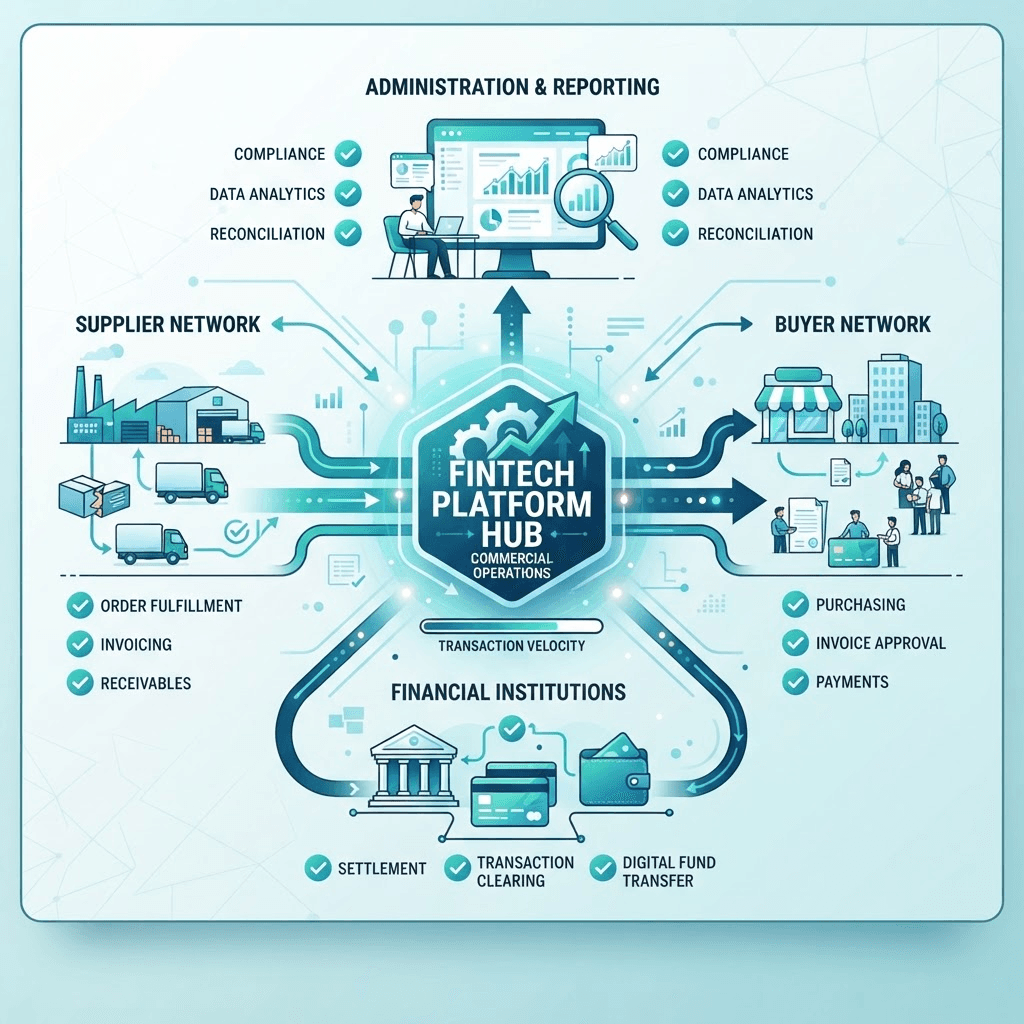
Reelaay combines four things in a single platform: working capital tied to confirmed orders, buyer and supplier verification, controlled payment flows, and clean settlement. Not because combining them is clever, but because they are interdependent. Working capital without verification creates risk. Verification without controlled payment creates uncertainty. Each element needs the others to make the transaction actually work.
What we are not trying to be
We are not trying to replace banks. Banks serve a purpose that is important and distinct from what we do. We are not a general-purpose lender. We are not a payment processor in the traditional sense. We are a transaction platform — specifically designed for the B2B purchase order cycle, specifically focused on the Nigerian and African market, and specifically built for the suppliers and buyers who are doing real commercial work and being held back by structural gaps in infrastructure.
The businesses we want to serve are not the ones who already have access to the world's best financial infrastructure. They are the ones who are doing excellent commercial work in a market that has not been built for them — and who deserve the tools to do it at the scale their capability warrants.
What drives the work
Every time a Nigerian supplier says yes to an order they would previously have turned down — because the working capital is there, the buyer is verified, and the payment is structured — that is the outcome we are working towards. Not as a metric. As a mission.
African commerce is not waiting for permission to grow. It is waiting for infrastructure. That is what Reelaay is here to build.
Key Takeaways
- Reelaay was built in response to a structural problem observed repeatedly: capable Nigerian suppliers losing deals due to missing transaction infrastructure.
- The problem is not business quality — it is the absence of integrated working capital, verification, payment control, and settlement.
- Nigeria's scale, commercial activity, and improving digital infrastructure make it the right market and the right time.
- Reelaay is a transaction platform, not a bank or a lender — purpose-built for the B2B purchase order cycle.
- The goal is straightforward: more African businesses executing more commercial transactions at greater scale and confidence.
Join the platform
If you are a Nigerian supplier dealing in confirmed purchase orders and want to understand how Reelaay can help you execute more of them, talk to our team. We would love to show you what structured execution looks like for your business.
Omotayo Olowofeso
Founder & CEO, Reelaay
Omotayo Olowofeso is the Founder and CEO of Reelaay, where he is building the transaction platform that helps African suppliers execute confirmed purchase orders with working capital, verification, and settlement built in. He writes about B2B trade, working capital, and the operational realities of doing business across African markets.
View all articles