Cash Flow Management for Nigerian Suppliers: A Practical Guide
Cash flow is the engine of your business — not profit, not revenue. Here is how Nigerian suppliers and distributors can take real control of their cash position, prevent crises, and fund growth deliberately.


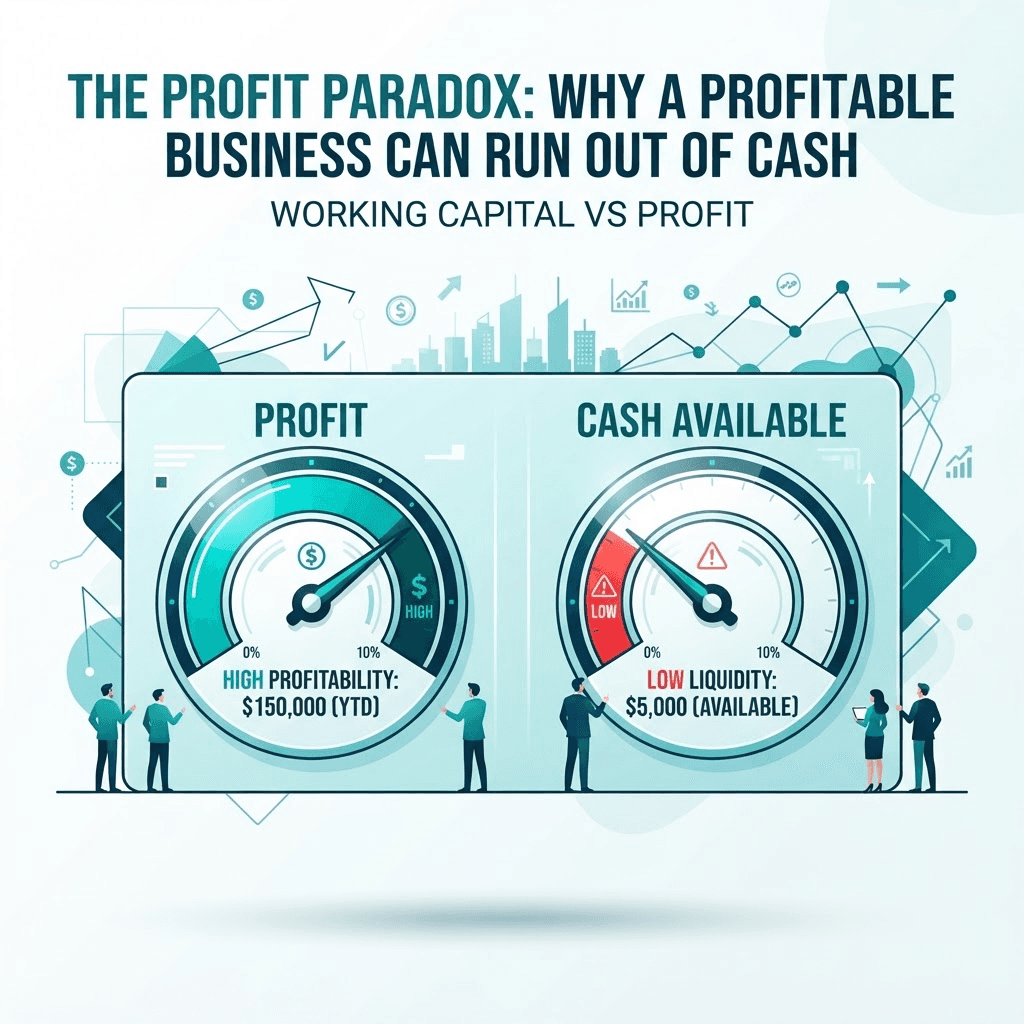
A building materials distributor in Abuja told me something that stuck with me. He said: 'I have been profitable every year for seven years. But three times in those seven years, I almost could not make payroll.' He was not exaggerating. He was describing one of the most common — and most misunderstood — realities of running a growing business in Nigeria: you can be making money and still be perpetually short of cash.
Cash flow management is not accounting. It is not about what your profit and loss says. It is about knowing — with precision — what cash you have, what cash you will need, and when. For Nigerian suppliers and distributors operating in a market where payment terms are long, credit is expensive, and orders can arrive unpredictably, this skill is not optional. It is survival infrastructure.
Understand your cash conversion cycle
The cash conversion cycle (CCC) measures how long it takes for money you spend to come back as cash received. For a distributor, it typically runs from the day you pay for goods to the day a buyer pays your invoice. If you buy stock and pay your supplier in 30 days, but your buyer does not pay you until 90 days after delivery, your cash is locked up for roughly 60 days on every order.
The shorter your CCC, the less working capital you need to sustain the same level of business activity. Businesses that manage this cycle well can grow without constantly needing external capital. Those that do not manage it find themselves in a permanent state of cash tension — regardless of how profitable they appear on paper.
- Days Inventory Outstanding (DIO): how long goods sit in your warehouse before being sold.
- Days Sales Outstanding (DSO): how long after delivery it takes for buyers to pay you.
- Days Payable Outstanding (DPO): how long you take to pay your own suppliers.
- CCC = DIO + DSO − DPO. The goal is to make this number as small as possible.
Build a 13-week cash flow forecast
Most Nigerian SMEs manage cash reactively — they check the balance when a payment is due. The businesses that avoid crises manage cash proactively. A 13-week rolling cash flow forecast is the most practical tool for this. It covers three months in weekly detail: what cash is coming in, what is going out, and what the net position will be at the end of each week.
You do not need sophisticated software. A well-maintained spreadsheet is enough. What matters is discipline — updating it weekly, being honest about when payments are actually likely to arrive (not when they are due), and using it to spot shortfalls before they become crises.
- List every expected cash inflow by week: buyer payments, advance payments, loan drawdowns.
- List every cash outflow: supplier payments, salaries, logistics, operating costs, loan repayments.
- Calculate the net position each week and the cumulative balance.
- Highlight any week where the balance goes negative — that is your window to act.
- Update every Monday. Discipline is more important than sophistication.
The five levers Nigerian suppliers can pull
Once you can see your cash position clearly, you have five levers to improve it.
- Shorten buyer payment terms: even moving a buyer from net-60 to net-45 improves your CCC by two weeks on every order. This compounds significantly over a year.
- Extend supplier payment terms: negotiate credit terms with your raw material or goods suppliers. If you can pay them in 45 days instead of 30, your DPO improves and your CCC shrinks.
- Reduce stock holding time: excess inventory is cash sitting in a warehouse. Order closer to confirmed demand rather than speculating on future orders.
- Chase receivables actively: money owed but not yet chased is capital you are lending interest-free. Assign clear ownership of collections within your team.
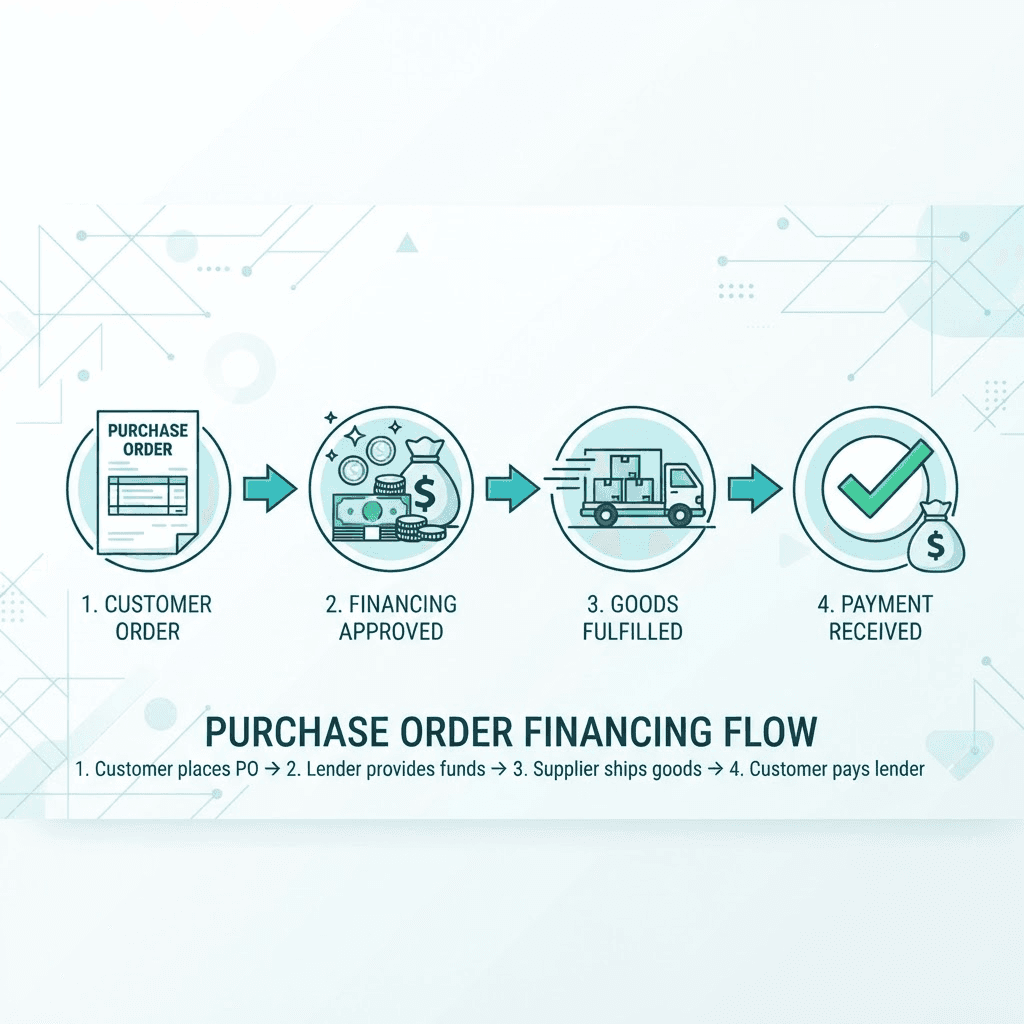
- Use transaction-based financing for large orders: instead of funding big orders entirely from your own cash reserves, use working capital tied to the specific transaction — deployed when the order is confirmed, repaid when the buyer pays.
The businesses that avoid crises manage cash proactively. A 13-week rolling forecast is the most practical tool for doing this.
Common cash flow mistakes to avoid
- Mixing personal and business finances: this makes your cash position impossible to read clearly and creates tax and compliance problems.
- Over-investing in stock: buying speculatively ties up cash in inventory with no guaranteed sale date.
- Not enforcing payment terms: a buyer who knows you will not enforce net-30 will always pay on net-90.
- Planning cash flow around invoice dates rather than realistic payment dates: if a buyer routinely pays 20 days late, build that into your forecast, not their stated terms.
- Using operating cash to fund capital investment: buying equipment or vehicles from your operating cash creates a crisis when a large order needs funding.
When cash flow becomes a growth constraint
There is a point in every growing business where cash flow management alone is not enough. You have done everything right — tight CCC, active collections, disciplined forecasting — and the business still runs out of runway because the order sizes have grown beyond what your internal capital can support.
This is not a failure. It is a stage. The right response is to access external capital that is structured around your transactions — not general-purpose debt that adds to your liabilities without solving the timing problem. Working capital tied to confirmed, verified purchase orders is the most efficient form of growth capital for a supplier at this stage.
Key Takeaways
- Profit and cash are different. You can be profitable and cash-poor — and many Nigerian suppliers are.
- The cash conversion cycle is the key metric: shorter is better, and every lever you pull should aim to shorten it.
- A 13-week rolling cash flow forecast is the most practical tool for proactive cash management.
- Five levers: shorter buyer terms, longer supplier terms, less inventory, active collections, transaction-based financing for large orders.
- When internal cash hits its limits, transaction-based working capital is the right next step — not a general loan.
Frequently Asked Questions
How do I start a cash flow forecast if I have no financial records? Start with this week. List every payment you expect to receive and every payment you need to make over the next four weeks. Do it in a spreadsheet. It will be imprecise at first — that is fine. The discipline of the exercise is what matters, not the perfection of the numbers.
How do I convince buyers to pay faster? The most effective approach is to make it easy — send invoices immediately upon delivery, include clear payment instructions, and follow up consistently on the due date (not days later). For repeat buyers, a milestone-based payment structure tied to delivery is easier to negotiate than a blanket reduction in payment terms.
At what point should I consider external working capital? When a single order requires more execution capital than you can comfortably commit without creating a cash crisis elsewhere in the business. If fulfilling one order would leave you unable to cover payroll or other obligations, that order is larger than your internal capital can support — and transaction-based financing is the appropriate tool.
Take control of your cash flow
Reelaay provides working capital tied to confirmed purchase orders — so you can execute large transactions without draining your operating cash. If you are dealing with timing gaps between order fulfilment and buyer payment, talk to our team about how the platform can help.
Omotayo Olowofeso
Founder & CEO, Reelaay
Omotayo Olowofeso is the Founder and CEO of Reelaay, where he is building the transaction platform that helps African suppliers execute confirmed purchase orders with working capital, verification, and settlement built in. He writes about B2B trade, working capital, and the operational realities of doing business across African markets.
View all articles