How to Prepare Your Business for Supplier Financing
Wanting financing and being ready for it are two different things. Here is what suppliers need to have in place before they approach a financing platform — and why it makes the difference.

A healthcare equipment supplier in Ibadan applies for transaction financing on a ₦55 million government hospital supply contract. The purchase order is confirmed. The buyer is credible. But the application stalls — the business has no financial statements for the past two years, the purchase order is vague on delivery specifications, and the registered business name does not match the trading name on the contract. The deal is fundable. The business is not ready.
This scenario plays out repeatedly. The financing gap is real, the appetite among funders is growing, and yet many suppliers who could qualify struggle to get through the process because they have not done the preparation work. This article covers what that preparation actually looks like.
Start with your business fundamentals
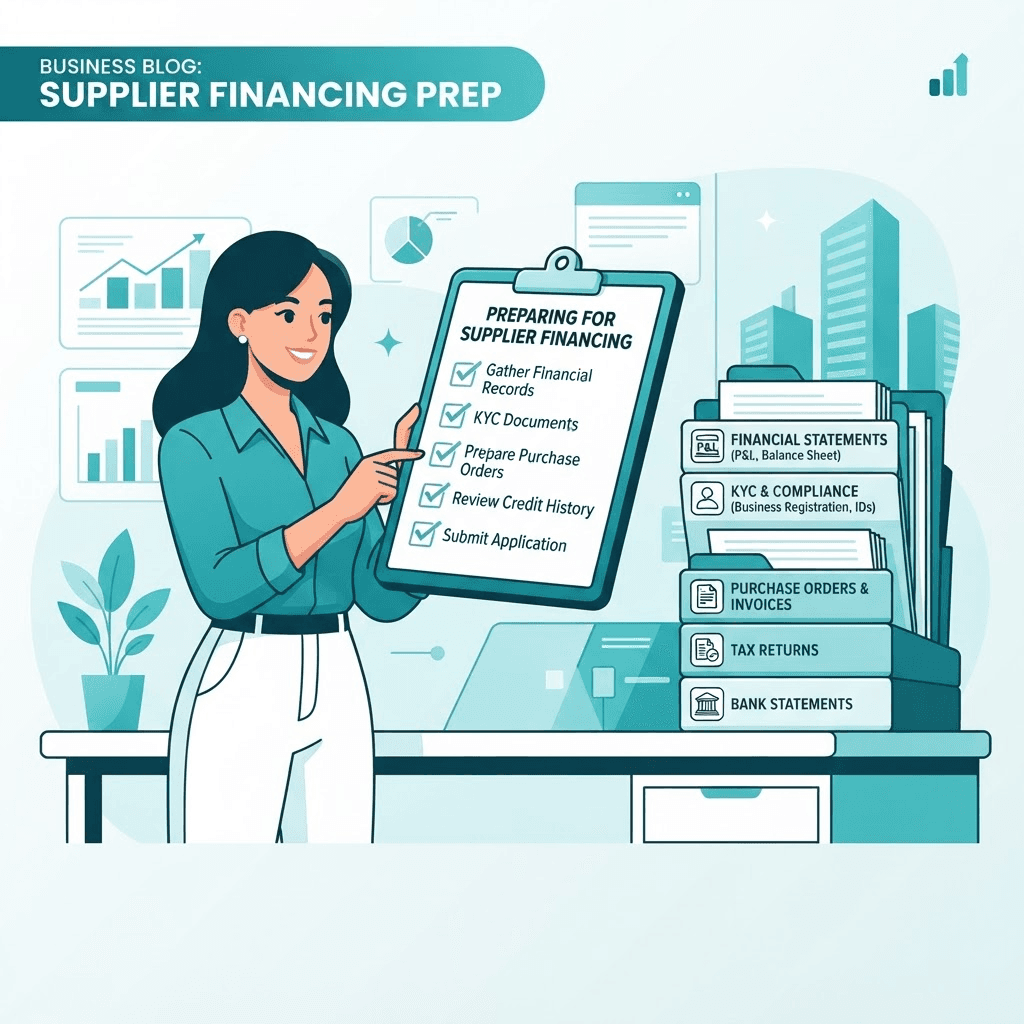
Before you approach any financing platform or funder, your business identity needs to be clean and consistent. This means your registered business name, your tax identification number, your business address, and your bank account details should all match and be current. Discrepancies — even minor ones — create friction and delays that can cost you a deal.
- CAC registration: ensure your Certificate of Incorporation is current and your status is active.
- Tax compliance: a current tax clearance certificate is increasingly a baseline requirement.
- Business bank account: transactions should flow through a registered business account, not a personal one.
- Directors and signatories: know who your authorised signatories are and ensure they are documented.
Get your financial records in order
You do not necessarily need audited accounts, but you do need coherent financial records. A funder trying to assess your ability to execute a ₦50 million order will want to see evidence that your business has handled meaningful transactions before and that your cash flows are trackable.
- Bank statements for the last 6–12 months: these tell the story of your cash flow better than any document.
- Management accounts: even a basic monthly income and expense summary is more useful than nothing.
- Evidence of past transactions: invoices, delivery records, and payment confirmations from previous orders.
- Current liabilities: know what you owe and to whom. Funders will ask.
Make your purchase order fundable
Not every purchase order is ready to be financed as-is. A fundable PO is one that answers the critical questions a funder needs to assess risk.
- The buyer's name, registered address, and contact details are on the document.
- The goods or services are clearly described — quantity, specification, unit price.
- The delivery date or period is explicit.
- The payment terms are stated — when and how payment will be made.
- The PO is signed or formally confirmed by an authorised representative of the buyer.
A PO that is vague, unsigned, or lacks buyer details is not fundable — regardless of how real the order is. Before you submit for financing, review the document against this checklist.
The financing gap is real and the appetite among funders is growing — but many suppliers who could qualify are simply not ready.
Know your numbers
The most important number is your total fulfilment cost: what it will cost you to execute the order. Not the order value — your cost to deliver it. This includes procurement, logistics, labour, packaging, and any contingency. The financing you request should be based on this number, not the invoice amount.
Knowing your margin on the order matters too. If the financing cost eats your margin entirely, the deal does not make commercial sense — regardless of the revenue it generates. Model this clearly before you apply.
Key Takeaways
- Business identity must be clean and consistent: CAC, TIN, bank account, and signatories all documented.
- Financial records do not need to be audited, but they do need to be coherent — bank statements and past invoices tell your story.
- Your purchase order must be specific, signed, and buyer-verified to be fundable.
- Know your fulfilment cost, not just your order value — financing is sized against what it costs you to deliver.
- Model the margin: if financing cost eliminates the profit, renegotiate the terms or the order price before proceeding.
Frequently Asked Questions
Do I need audited financial statements to apply for supplier financing? Not necessarily, depending on the platform. Many transaction-based financing providers can work from bank statements and evidence of past orders. However, cleaner financial records always improve your application.
What if my business is new and has limited financial history? Your buyer's creditworthiness carries significant weight in transaction-based financing. A new supplier with a strong, verified buyer is often fundable. The documentation requirements may be more extensive, but it is not automatically disqualifying.
How long does the application process take? On a purpose-built platform, a complete and clean application can move through review and approval within 24–72 hours. Incomplete applications take longer — sometimes significantly longer.
Ready to submit your first deal?
Reelaay reviews supplier applications built around confirmed purchase orders. If you have an order and want to understand whether your business is ready, talk to our team — we can help you identify exactly what you need before you apply.
Omotayo Olowofeso
Founder & CEO, Reelaay
Omotayo Olowofeso is the Founder and CEO of Reelaay, where he is building the transaction platform that helps African suppliers execute confirmed purchase orders with working capital, verification, and settlement built in. He writes about B2B trade, working capital, and the operational realities of doing business across African markets.
View all articles