How Buyers Can Build More Reliable Supplier Networks
Supplier delays are rarely random. Most trace back to structural problems the buyer could have identified — or helped solve — before the order was placed.

A procurement manager at a Lagos consumer goods company has a recurring problem. She works with twelve active suppliers. Three of them consistently deliver on time, within spec, and without drama. The other nine are a source of constant friction — delays, quality issues, partial deliveries, excuses. She has replaced several over the years. The replacements have the same problems. The pattern is the same. The suppliers change. The frustration does not.
The temptation is to blame the suppliers. But the more honest question is: what did the procurement process contribute to this outcome? In most cases, quite a lot.
Reliability is not a supplier characteristic — it is a relationship outcome
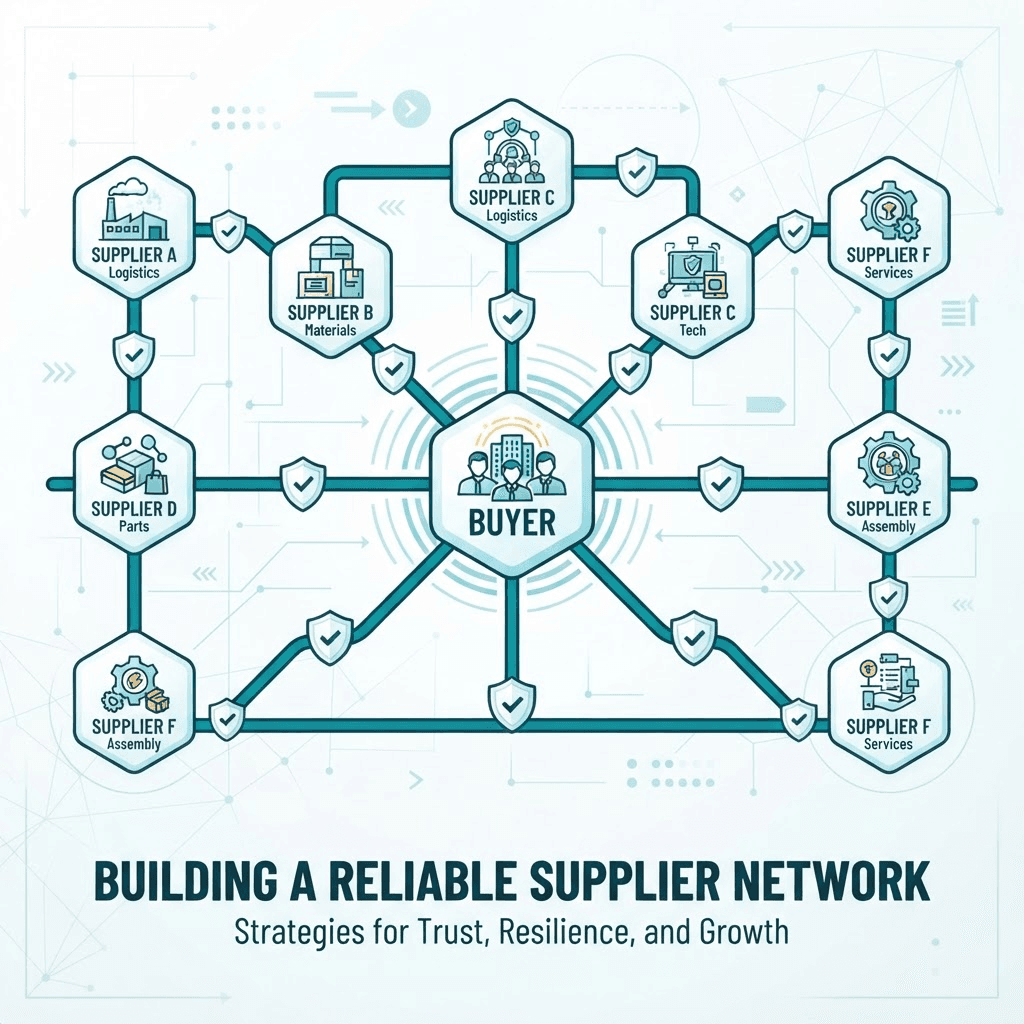
The most reliable suppliers are not simply the ones with the best intentions. They are the ones who operate in relationships with clear terms, predictable payment timelines, and mutual accountability. When buyers structure their procurement well, they dramatically improve the probability of consistent delivery — regardless of which suppliers they work with.
The five things reliable buyer-supplier relationships have in common
- Clear, written order specifications with no room for ambiguity about quantity, quality, and delivery terms.
- Defined payment milestones that suppliers can plan their cash flow around in advance.
- Verification of the supplier's capacity before the order is placed, not after a delay.
- A single, authorised point of contact on both sides — procurement relationships break down when approvals and communication are scattered.
- A fair dispute resolution process that neither party has to fear invoking.
None of these are novel. But in Nigerian and broader African procurement, they are often treated as bureaucracy rather than infrastructure. The businesses that treat them as infrastructure have more reliable suppliers — not because they found better ones, but because they created the conditions for reliability.
Working capital is a buyer problem too
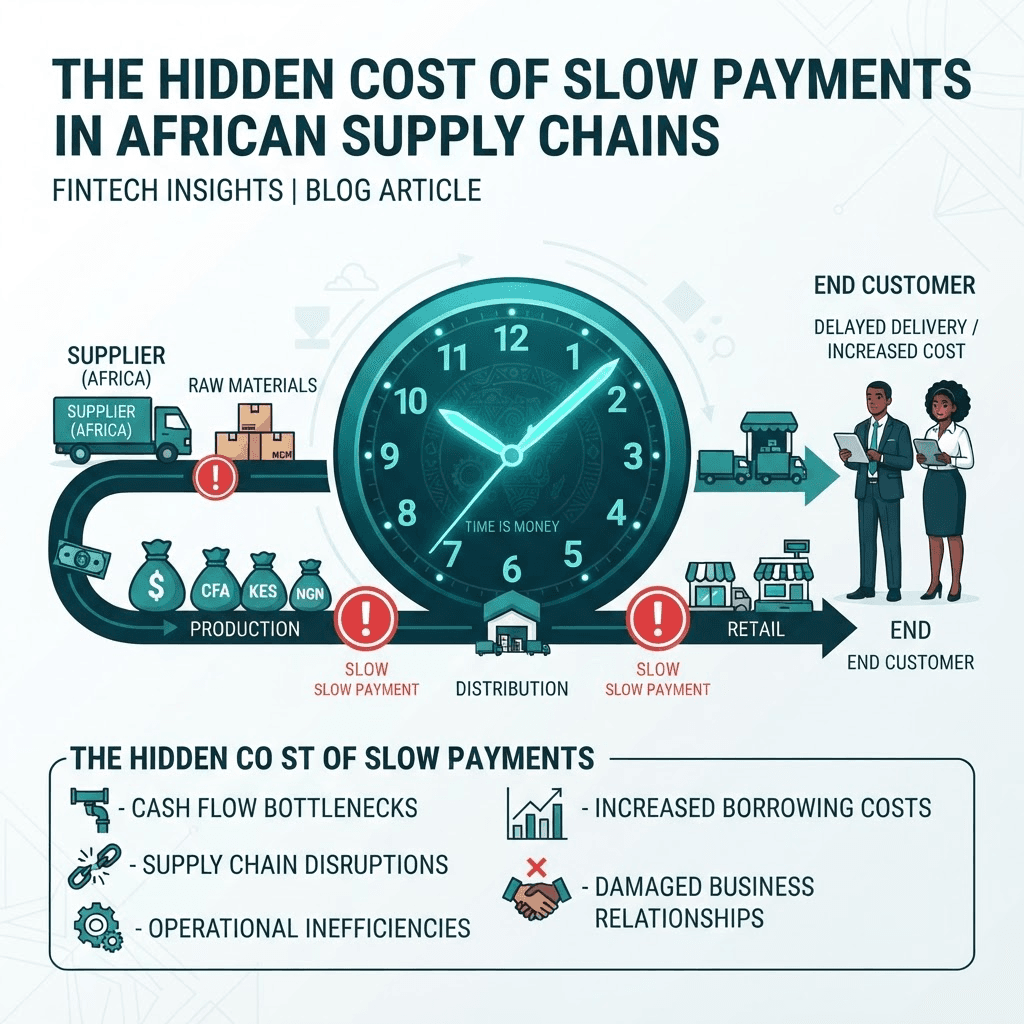
One of the most underappreciated factors in supplier reliability is the buyer's own payment behaviour. A buyer who pays net-90 is effectively asking suppliers to fund 90 days of production costs out of their own pocket. For large suppliers with credit facilities, this is manageable. For the majority of SME suppliers in Nigeria, it can make the difference between being able to execute the next order and not.
When buyers delay payment on completed orders, the downstream effects are predictable. Suppliers do not just lose margin. They lose the working capital needed to fund the next delivery. The very delay that the buyer inflicts on payment becomes the reason the next delivery is delayed.
The very delay that the buyer inflicts on payment becomes the reason the next delivery is delayed.
How structured transaction platforms change this
When payments flow through a managed transaction platform, both buyer and supplier have visibility into what is expected and when. Milestones are defined. Payments are triggered by confirmed delivery. Suppliers know they will be paid when they deliver — which means they can fund fulfilment confidently. Buyers get reliable delivery because their suppliers are not cash-strapped in the middle of an order.
This is the case for transaction infrastructure in B2B commerce. It does not just make individual transactions safer. It makes entire supplier networks more reliable over time.
Practical steps for procurement teams
- Run verification before you commit: understand the supplier's operational capacity and financial position relative to the order size.
- Shorten payment terms where possible — or at minimum, make the timeline predictable and honour it.
- Move from purchase orders that are vague to ones that are specific: quantities, specifications, delivery windows, quality standards.
- Create a structured onboarding for new suppliers rather than learning about their limitations at delivery time.
- Build a preferred supplier register based on track record — reward reliability with more business.
Key Takeaways
- Supplier reliability is partly a function of how well the buyer structures the relationship and the transaction.
- Unclear terms, late payments, and poor onboarding create unreliable suppliers even from capable businesses.
- Payment timing matters more than most procurement teams realise — it directly affects supplier cash flow and delivery capacity.
- Structured transaction platforms benefit buyers by giving suppliers the certainty they need to execute confidently.
- Reliable supplier networks are built, not found.
Frequently Asked Questions
How do I verify a supplier's capacity before placing a large order? Ask for references from buyers of comparable order sizes. Review their operational setup — storage, logistics, production. Ask how they plan to fund the execution if upfront costs are significant. The willingness and quality of the answer tells you a great deal.
How can we shorten our payment terms without affecting cash flow? Even predictable 60-day terms are more manageable for suppliers than unpredictable 45-day terms. Suppliers can plan around certainty. Consider also milestone-based payments tied to delivery confirmations.
Is there technology that can help manage buyer-supplier transactions? Yes. Platforms like Reelaay provide a managed transaction environment where purchase orders, payments, and settlement are handled in one place — giving both sides visibility and accountability.
Building a more reliable supply chain?
Reelaay works with buyers and suppliers to structure transactions that work for both sides — with verification, controlled payments, and clear settlement. Learn more about how the platform supports procurement teams and their supplier networks.
Omotayo Olowofeso
Founder & CEO, Reelaay
Omotayo Olowofeso is the Founder and CEO of Reelaay, where he is building the transaction platform that helps African suppliers execute confirmed purchase orders with working capital, verification, and settlement built in. He writes about B2B trade, working capital, and the operational realities of doing business across African markets.
View all articles