Why Nigerian Businesses Turn Down Purchase Orders They Could Have Won
A confirmed order sitting on the table — and the supplier says no. It happens more often than people admit. Here is why it happens, what it costs, and how to stop it.

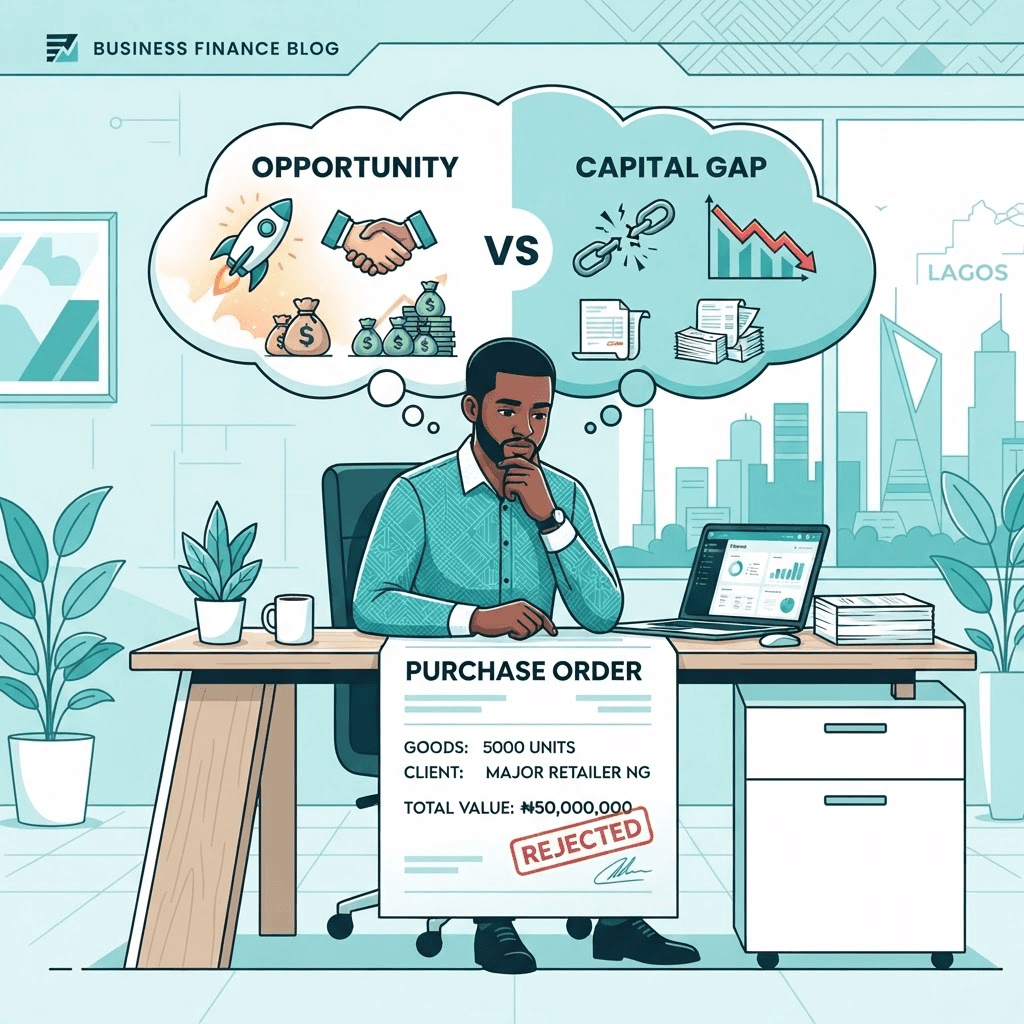
Picture this. A food and beverage distributor in Abuja receives an email from a well-known supermarket chain. They want to place a ₦60 million order — FMCG goods, confirmed quantities, clear delivery timeline. It is the kind of order the distributor has been working towards for three years. The buyer is serious. The margins are decent. And the distributor says no.
Not because they cannot execute. Not because the relationship is bad. Because they simply do not have ₦45 million sitting in their account to buy the stock, arrange logistics, and handle the working capital needed to fulfil it. By the time they could piece together the funding, the window would be gone.
This is not an edge case. It is one of the most common — and least discussed — problems in Nigerian business.
The real reason most POs get declined
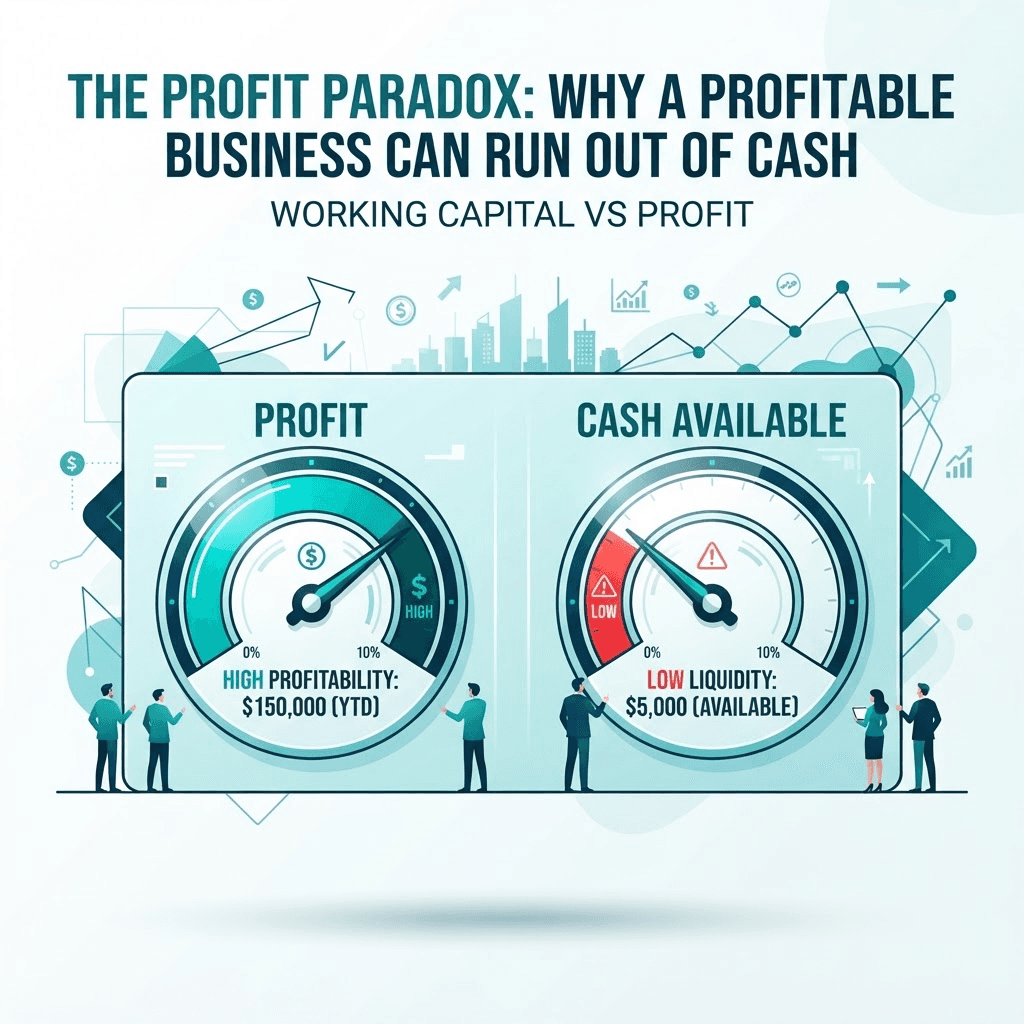
Ask a Nigerian supplier why they turned down a large order and they will rarely say 'I ran out of cash.' They will say the timing was not right, or the margins did not work, or they were focused on other priorities. But peel back the surface and the answer is almost always the same: the capital was not there at the moment it was needed.
Suppliers operating in manufacturing, agriculture, healthcare distribution, construction materials, and FMCG all face a version of the same structural problem. Their cash is tied up — in receivables from previous orders, in inventory they bought speculatively, in loans with repayment schedules that do not align with how their customers pay. When a big order lands, they are not starting from zero. They are starting from negative.
What a declined order actually costs
Declining one order is painful. But the downstream cost is far greater than the margin you walked away from.
- The buyer finds another supplier — one who could fund the order — and that relationship deepens over time.
- Your reputation as a reliable, scalable partner takes a quiet hit. Procurement teams remember who said no.
- The competitor who said yes gains the experience, the reference, and the cash flow from the deal.
- You spend the next quarter working on smaller transactions that do not move the needle.
- The opportunity cost compounds: the revenue from that order could have funded your next one.
In Nigerian commerce — where relationships, referrals, and track record matter enormously — turning down a major buyer once can mean never being offered the same opportunity again.
Why bank financing does not solve it
The obvious answer is to go to a bank. But if you have ever tried to access a business loan quickly in Nigeria, you know how that goes. The documentation is extensive. The approval timeline is measured in weeks, not days. The collateral requirements are often a barrier for businesses that are asset-light but operationally strong. And the loan structures are rarely designed around how B2B trade actually works.
A supplier does not need a two-year loan repaid in monthly instalments. They need working capital tied to a specific, verified transaction — funding that is deployed when the order is confirmed and settled when the buyer pays. The mismatch between what the banking system offers and what growing suppliers actually need is the core of this problem.
The mismatch between what the banking system offers and what growing suppliers actually need is the core of this problem.
What changes when you have transaction-based capital
When working capital is tied to a specific, confirmed order, the calculation changes entirely. You stop evaluating opportunities based on what is in your account today. You start evaluating them based on the strength of the buyer, the clarity of the terms, and your ability to execute. The capital follows the transaction.
This is how larger, more sophisticated suppliers operate. They have access to revolving credit facilities, trade finance lines, or supply chain financing that activates when an order is confirmed. They do not decline on the grounds of cash position alone. They decline based on strategic fit — which is where the conversation should be.
Key Takeaways
- Declining large orders due to working capital gaps is more common than suppliers publicly admit.
- The true cost of a declined order goes beyond the lost margin — it includes lost relationships and compounding opportunity cost.
- Traditional bank financing is rarely structured to match how B2B transactions actually work.
- Transaction-based financing — capital tied to a confirmed, verified order — gives suppliers the ability to say yes.
- The businesses that grow consistently are the ones who solve the working capital problem before it limits them.
Frequently Asked Questions
What is purchase order financing? Purchase order (PO) financing is working capital provided against a confirmed order from a buyer. Instead of borrowing against general assets, you borrow against a specific, verified transaction. Capital is deployed to help you fulfil the order and repaid when the buyer pays.
How quickly can I access PO financing? On a platform designed for speed, capital can be approved and advanced within 24–48 hours of a verified order being submitted and confirmed.
Does my business need to be large to qualify? No. PO financing is typically more accessible than traditional lending because it evaluates the buyer's creditworthiness and the transaction structure — not just the supplier's asset base.
What if the buyer does not pay? Buyer verification is a core part of responsible PO financing. A properly structured deal includes buyer due diligence and controlled payment flows to reduce this risk significantly.
Ready to stop turning down orders you could win?
Reelaay provides working capital, buyer verification, and settlement in one platform — so Nigerian suppliers can execute confirmed purchase orders with confidence. Talk to our team to learn how it works for your business.
Omotayo Olowofeso
Founder & CEO, Reelaay
Omotayo Olowofeso is the Founder and CEO of Reelaay, where he is building the transaction platform that helps African suppliers execute confirmed purchase orders with working capital, verification, and settlement built in. He writes about B2B trade, working capital, and the operational realities of doing business across African markets.
View all articles